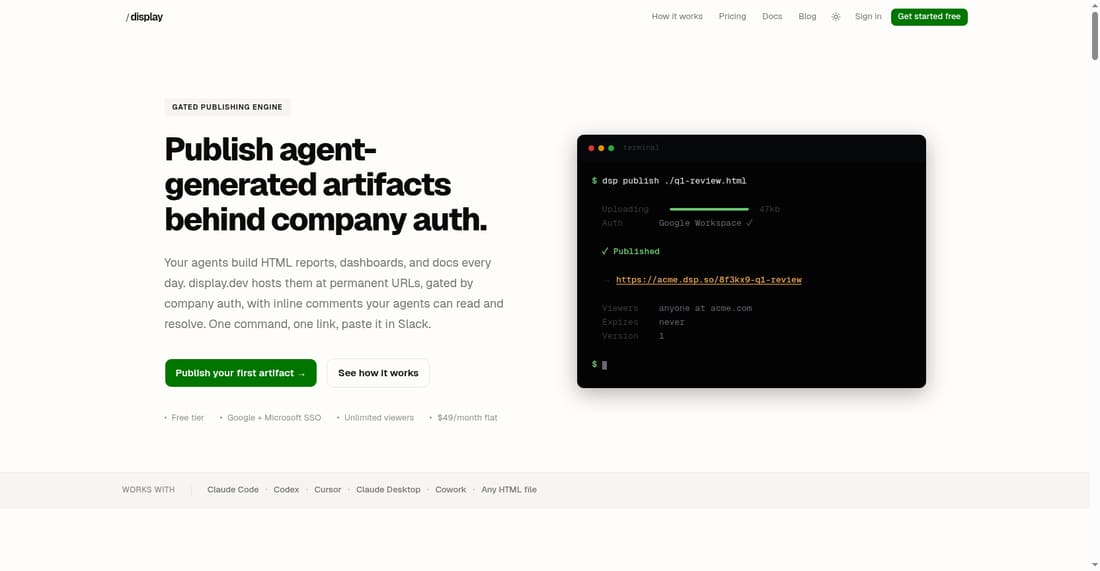
display.dev is a gated publishing engine for AI-generated artifacts. Publish HTML reports, dashboards, and docs behind company auth with one CLI command. Get permanent URLs with inline comments your agents can read and resolve.
Freemium
$15/mo
How to use display.dev?
Use the CLI command `dsp publish ./file.html` to publish any HTML or Markdown artifact. Share the permanent URL with your team. Viewers sign in with Google or Microsoft SSO, or a one-time password. Teammates drop inline comments, and your agent reads them via MCP to update and resolve threads.
display.dev 's Core Features
One-command CLI publishing: Run `dsp publish ./file.html` from your terminal to instantly share agent-generated artifacts as permanent, authenticated URLs.
Company SSO gating: Viewers sign in with Google or Microsoft accounts they already use, ensuring sensitive artifacts stay private without extra setup.
Inline comments with MCP integration: Teammates drop comments on artifacts, and your agent reads them, updates the document, and resolves threads — keeping artifacts alive.
Unlimited viewers at every tier: No per-seat pricing. Share with your entire company — PMs, execs, legal — for the same flat monthly price.
Full HTML fidelity: Host arbitrary HTML with JavaScript, CSS, and interactivity intact. D3 charts, live filters, and hover states work as intended.
Permanent URLs that never expire: Every artifact gets a stable URL. Share in Slack, Notion, or email — it works six months later with no 'link expired' errors.
Audit logs and viewer stats: Track who accessed what and when. Pro plan includes 90-day logs; Enterprise offers 365-day logs for compliance.
display.dev 's Use Cases
AI agents like Claude Code or Cursor produce interactive dashboards; share them securely with stakeholders via a single link.
Engineers generate HTML spec reviews; publish them behind company auth so PMs and designers can comment and iterate.
Data scientists create live D3 charts; share them with execs without losing interactivity or requiring GitHub accounts.
Legal teams need to review agent-generated reports; gate access with SSO and track who viewed what via audit logs.
Design teams share interactive prototypes; avoid screenshot degradation by hosting full HTML with CSS and JS intact.